
Your key customer has set an SBTi target that covers Scope 3. Your emissions are part of that target. So the customer's supplier survey asks if you have a climate target too. Many suppliers then meet the Science Based Targets initiative for the first time. They need to know which path applies to them, which criteria count and how long validation takes.
- Science based targets: emission reduction targets in line with the Paris Agreement, checked and published by the SBTi.
- Five stages: footprint and base year, choice of path, targets, submission and validation, yearly monitoring.
- Paths: a simpler path for SMEs, the corporate path, and sector paths for some industries.
- Changes: from 1 February 2028, all new submissions must follow the Corporate Net-Zero Standard V2.0.
What is the SBTi?
 The SBTi (Science Based Targets initiative) turns the climate goals of the Paris Agreement into clear emission targets for companies. It also checks independently if a company's target meets them. The initiative started in 2015. Four organisations set it up together: CDP, the UN Global Compact, the World Resources Institute and WWF. The SBTi guides companies through target setting and sets the requirements for each sector. It works mainly with private companies.
The initiative aims to halve emissions before 2030 and to reach net zero before 2050.
Joining the SBTi is today the most credible way to show decarbonisation targets in line with the Paris Agreement. This means cutting your carbon footprint until you reach net zero. ESG is now a standard in many sectors, not only a choice. So a credible reduction strategy builds trust and gives you an advantage.
The initiative is no longer a niche. According to the SBTi, more than 11,000 companies have committed to targets or have validated targets. Together, they make up more than 40% of global market value. For suppliers, this has a practical effect. If your key customer set a target that covers Scope 3, its target reaches your emissions. This is why the question about climate targets often comes from a purchasing survey, not from a regulator.
How to prepare a decarbonisation strategy in line with SBTi?
 A decarbonisation strategy is a plan to cut your carbon footprint. It looks for the best ways to limit your impact on the climate, with climate neutrality as the final goal. The plan cuts emissions with less energy use, renewable energy, less waste and careful choice of suppliers.
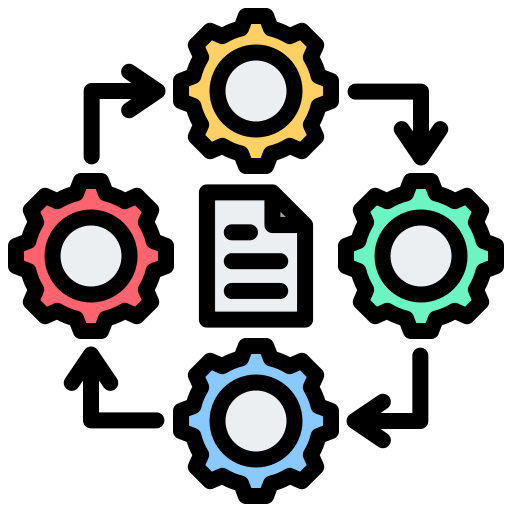
In the SBTi, decarbonisation is an ordered process, not a one-time statement. It has five stages. On the corporate path, a commitment in the SBTi portal can come before them.
Free registration in the portal and a commitment letter. It starts the clock: 24 months to submit a target.
Emissions in Scopes 1, 2 and 3 under the GHG Protocol and the choice of a base year.
SME or corporate, and within it, a sector path if needed.
Ambition, time frame and scopes under the SBTi criteria. Most rejections happen here.
You submit the target, and SBTi Services reviews it.
You report emissions and progress. Validation does not end the process: it opens it.
Stage 0. Commitment: optional, corporate path
Send a statement in which your company commits to set a reduction target based on the SBTi criteria, that is, on science.
On the corporate path, this statement is step zero: you register in the SBTi portal and send your commitment. It is optional and free. Its main purpose is to tell others that your company plans to set and validate targets with the SBTi.
The commitment appears on the initiative's public dashboard. From that moment, you have 24 months to submit your target for validation. This seems a lot, until you count how much work the whole submission takes.
Stage 1. Corporate carbon footprint and base year
Find and calculate your greenhouse gas emissions, that is, your company's carbon footprint in Scopes 1, 2 and 3 under the GHG Protocol. If you cannot do it yourself, you can ask an external company for help.
In short: Scopes 1 and 2 cover the emissions of your own operations. Scope 3 covers the emissions of your value chain, including your supply chain. Read more about the difference between a company's and a product's carbon footprint.
Before you calculate emissions, set your organisational boundaries: decide who “we” are. A common error is to set a target only for the parent company and leave out the subsidiaries. This is not allowed: you set the target for the whole group.
The second point is the method. You must calculate the footprint under the GHG Protocol, but that is not all. The calculation must also meet the SBTi criteria. In most categories, they require the minimum boundaries of the GHG Protocol. This can surprise you: emissions from working at home are not included in category 7 (employee commuting). Also check the new rules for Scope 2.
The next step is the base year of your corporate carbon footprint. The base year is the point from which you measure reduction. So you need complete and verifiable data for Scopes 1, 2 and 3 for that year. The Corporate Net-Zero Standard V2.0 has a stricter rule. At the start of each cycle, you choose the latest year with complete data. The idea is to continue reduction, not to reset history.
Stage 2. Choice of path: SME, corporate or sector
This decision shapes the whole process, from the criteria that apply to you to the cost of validation. There are two paths.
The SME path is a simpler path for small and medium-sized companies. It has a shorter form, a simpler review and a lower cost. On this path, you set targets only for Scopes 1 and 2. We describe the conditions below.
The corporate path is the full path for all companies that do not meet the SME criteria. Within it, some companies also follow a sector path, with its own criteria and targets.
Sector paths are now either mandatory or optional:
- Mandatory: FLAG (Forest, Land and Agriculture), Buildings, Power, Cement, Steel, Chemicals, Air Transport, Maritime, Financial Institutions
- Optional: Aluminium, Apparel and Footwear, Automotive and Land Transport
The oil and gas sector is an exception. The SBTi currently does not accept submissions from fossil fuel companies.
You only know if a sector path applies to you after you calculate your carbon footprint. The level of emissions in a given area decides, not the industry alone. The buildings criteria show this well. Working in construction is not enough. What counts is your role in relation to buildings (developer, owner, manager or financial institution) and the share of building emissions in your footprint.
Stage 3. Target setting
Work on your emission reduction target under the SBTi criteria. Describe how you will reduce or remove fossil fuels from your operations. Also describe how you will use more renewable energy and improve energy efficiency, for example by using less electricity. The next chapter on methods and scenarios gives more detail.
A target for Scopes 1 and 2 is mandatory, and its ambition must support the 1.5°C path. In short, this means at least 4.2% reduction per year on average, or 42% over ten years. All emissions from both scopes go into the target.
You must set a Scope 3 target if Scope 3 is more than 40% of your total emissions. At this stage, you also check if a sector path applies to you. If it does, its extra criteria apply.
There are also extra options. Instead of a classic reduction in Scope 3, you can commit to supplier engagement. This means that a set share of your suppliers will set their own science-based targets. In Scope 2, you can commit to 100% renewable electricity.
But setting the target is only half of the work. The other half is the route to it. Read how to build a reduction plan step by step in How to reduce your business carbon footprint in seven steps.
Stage 4. Submission and validation
When your company has calculated its carbon footprint and set its targets, submit them to the SBTi experts for official validation. You have 24 months from your commitment for this step, including the validation itself.
The validation has three stages and takes about 30 days. Add a queue before the review starts, which can take several weeks.
The validator reviews the documents and prepares questions for a one-hour online meeting.
An extra round of questions, if some issues are still open.
The validator approves the target or refuses to publish it.
What SBTi validation is and what it is not
This is the most common misunderstanding in the whole process. People confuse validation with an audit of the carbon footprint or with a review of the business sense of the reduction plan. Today, these are three different things.
Validation checks:
- if the target meets the SBTi science-based criteria,
- if the emissions inventory follows the GHG Protocol,
- the documents, reviewed by appointed validators.
Validation is not:
- a full verification of the corporate carbon footprint,
- a confirmation that you have reached the target,
- an assessment of whether the reduction plan is feasible or makes business sense.
In other words, checking the target is not an audit of the carbon footprint. But this is changing: in the Corporate Net-Zero Standard V2.0, independent data verification becomes a fixed part of the process.
How to read the criteria, examples from real submissions and a checklist for validation, based on the submissions we worked on.
Download free →Stage 5. Publication and yearly monitoring
Announce publicly that you have set a target based on the SBTi criteria and that you work towards the goals of the Paris Agreement. Show which reduction targets your company adopted and when you plan to reach them.
The approved target goes to the SBTi Target Dashboard. The SBTi gives the publication date in the Validation Statement. Your company can ask to change it, but the target must be published within six months of the validation decision at the latest.
This is the last step, but the most important one. Report your emissions and track your progress every year. After approval, your company must publish its emissions and its progress towards the target every year. This stage is the hardest. The targets are ambitious, and business conditions change, which makes it harder to meet them.
A validated target is a commitment for five years, not a one-time formality. It includes three things:
- Every year: publicly report your full emissions inventory and your progress towards the target.
- After a significant event: recalculate the base year and the target. This applies to an acquisition, the sale of part of the business, a large change of method or a large error in the base data. After larger changes, a new validation may be needed.
- Every five years: a mandatory review of active targets against the current SBTi criteria.
Four key terms: near-term, long-term, net zero and neutralisation
 To understand decarbonisation targets, you need to know the basic terms.
Targets for the next 5 to 10 years. This target is always required: without it, there is no submission.
Reduction to the level of residual emissions, the minimum you cannot cut with today's technology. Deadline: 2050 at the latest.
Removing from the atmosphere the residual emissions that remain after reduction. Removals do not count towards the reduction target. Only here do carbon credits come in.
The state in which a company has reached its long-term target and neutralised its residual emissions.
Carbon credits do not count towards the near-term or long-term target. Offsets are a tool to neutralise what remains after reduction, not a way to reduce.
What criteria, methods and scenarios does the SBTi use?
 The SBTi uses these temperature scenarios:
- 1.5°C: limits the rise in temperature to 1.5°C above pre-industrial levels.
- Well below 2°C: keeps the rise in average global temperature well below 2°C above pre-industrial levels. You can use it only for Scope 3.
- Net-zero targets: the SBTi also has a separate framework for net-zero targets, described in the Corporate Net-Zero Standard. Companies commit to reach net zero (climate neutrality) by 2050 or earlier. This needs deep emission cuts and investment in removing CO₂ from the atmosphere.
Each company that wants to join the SBTi can choose which target it wants to reach:
- a near-term target,
- a net-zero target.
It can use these types of targets:
- Absolute targets: you plan a reduction of your total carbon footprint compared with the base year.
- Intensity targets: you set a target and monitor emissions per unit, for example kg CO₂e per unit of revenue. You can use this only when an approved 1.5°C sector path models the targets.
- Sectoral Decarbonization Approach (SDA): companies set targets in line with the path of their whole sector. It takes into account the options for reduction in sectors such as energy, transport or construction.
The current list of sector guidance is on the SBTi website: https://sciencebasedtargets.org/sectors
Target setting methods:
- Absolute Emission Contraction: targets follow the global rate of reduction needed to limit global warming. Companies set targets for their absolute emissions in line with this rate.
- Emissions Intensity Approach: companies set targets for emissions intensity, that is, emissions per unit of production, revenue or another economic indicator. These targets must follow the decarbonisation paths of the Paris Agreement.
Choose the methods and scenarios that fit your operations, your options to cut emissions and your ambition. The targets must be measurable, realistic and in line with current climate science.
The SME path
 Small and medium-sized companies can use a simpler path. It has a shorter form, a simpler review and a lower validation cost, and no near-term target for Scope 3.
You must meet all of these conditions:
- a carbon footprint below 10,000 t CO₂e in Scopes 1 and 2 (location-based method);
- at least two of the three SME criteria: fewer than 250 employees, turnover below EUR 50 million, assets below EUR 25 million;
- not in the financial or oil and gas sector;
- no mandatory sector criteria, including FLAG;
- no parent company on the standard path.
Some requirements stay the same as on the full path. You need a complete carbon footprint inventory and yearly monitoring. And you need a long-term Scope 3 target that covers at least 90% of these emissions.
- a simpler form and review
- no near-term target in Scope 3
- a lower validation cost
- a full corporate carbon footprint inventory
- yearly monitoring of progress
- a mandatory long-term Scope 3 target, whatever its share, covering at least 90% of emissions
Which organisations cannot join the initiative and why?
 The Science Based Targets initiative is open to companies from most sectors. But some types of activity may conflict with the goals of the SBTi. Today, these organisations may have problems joining the initiative or may be excluded:
- Cities, local governments, public sector bodies, educational institutions and non-profit organisations: the SBTi currently does not assess targets for them. Cities can register their interest in target setting through the Science Based Targets Network (SBTN).
- Fossil fuel companies: companies whose main business is the extraction and production of fossil fuels (coal, oil, natural gas) may not be accepted. Their core business directly conflicts with the global goals for reducing greenhouse gas emissions.
The SBTi keeps developing its standards and regularly updates its guidance and criteria. For example, it is working on sector guidance for oil and gas.
Changes until 2028: SBTi Corporate Net-Zero Standard V2.0
 On 11 June 2026, the SBTi published version 2.0 of the Corporate Net-Zero Standard. If you plan a submission, the dates matter most. They decide which rules you use for your target today.
Targets validated earlier stay valid until the end of their period, subject to the mandatory review every five years. Companies will apply the new rules step by step, with each new cycle.
In short, these things change:
- the split into SME and corporate gives way to categories A and B;
- the near-term target becomes a fixed five-year cycle, counted from the latest year with complete data;
- Scope 1 and Scope 2 get separate targets;
- in Scope 3, the 40% threshold and the fixed 67% coverage go, and all relevant categories count instead;
- the transition plan and independent data verification become part of validation.
We explain each of these changes, with the new ways to set targets and the end-of-cycle assessment, in a separate article on SBTi 2.0.
Benefits of decarbonisation in line with SBTi
 Some see decarbonisation as a cost. But companies that went through the process see it differently. In an SBTi evaluation survey, 95% of them said that target approval was good for their reputation. These are the four benefits they mention most often:
Customers, the media and other stakeholders question climate statements without external checks. A target approved by the SBTi is independent proof that it follows science. It also lowers the risk of greenwashing claims.
Many large buyers ask suppliers for reduction targets in surveys, supplier selection and contracts. A validated target answers this in one sentence.
The level of ambition, the scopes, the time frame and the monitoring rules are set in advance. You do not need internal talks about what an “ambitious target” means.
Requirements for emissions reporting are growing. A company with an approved target already has a carbon footprint, a base year and a plan. New rules will ask for exactly this.
Which companies have SBTi targets?
 Their number grows every year. The SBTi keeps the current list of companies with validated targets in its Target Dashboard. There you can also check if your customer or competitor has already set a target.
In Poland, where our team is based, companies with validated targets include large retail, logistics, packaging, automotive parts and real estate companies. Others, including banks and chemical producers, have committed to set a target and have 24 months from registration to do it.
We describe the service on our page on SBTi target submission and validation.
The role of decarbonisation in fighting climate change
 To protect the planet from the worst effects of climate change, we need ambitious decarbonisation. Some effects are already visible in some regions, but the response must be global. Droughts, forest fires, floods, storms and higher temperatures already happen. Further warming can lead to worse effects:
- lower harvests, hunger and higher food prices;
- flooding of coastal areas as sea levels rise;
- diseases such as malaria or dengue, which spread at higher temperatures.
But awareness alone is not enough. Consuming less or giving up economic growth is a small drop in what is needed. Decarbonisation needs technical and system solutions, not bans. This means a decarbonisation strategy both for countries and for private companies.
Are you looking for a decarbonisation strategy specialist?
Almost one in four Polish SBTi submissions went through our hands. We are responsible for 23% of the approved submissions from Poland until the end of 2024. We were among the first to guide companies through this path. We cover the emissions inventory, the choice of path, target setting, validation and yearly progress reports.