
Your R&D team must choose between two formulas for a new material. One has a lower carbon footprint. The other avoids a substance of concern but is harder to recycle. A large customer will ask for data on both points before it signs a contract. You need to compare the options now, while a change still costs little.
- SSbD: a voluntary EU framework to assess the safety and sustainability of chemicals and materials while you design them.
- Origin: the Commission recommended it in 2022; its Joint Research Centre (JRC) revised the framework in 2025.
- Scope: safety, the environmental life cycle (LCA), social and economic aspects, and documented decisions.
- Legal status: not a legal duty; it does not replace REACH, CLP, LCA or an EPD.
- First step: one product, a simple screening and a clear list of missing data.
What is SSbD?
 Manufacturers must show more than technical compliance. Customers ask if a product is safe for people and nature. They also ask about its impact over its whole life. And they want to know if its formula, production and supply chain will meet future rules and market demands.
In this context, the European Commission has developed SSbD: Safe and Sustainable by Design. The idea is to make products safe and sustainable from the design stage. It matters most to chemical producers, but it reaches far beyond them.
SSbD helps companies make design decisions early, before a formula, material, process or technology goes into large-scale use. You do not wait until the end of development to check safety and impact on nature. You check them during design and in each round of work.
SSbD is a European framework to assess and design chemicals and materials. Its aim is to support new ideas that lead to safer and greener solutions over the whole life cycle. It was developed by the Joint Research Centre (JRC) of the European Commission. It is the scientific basis of Commission Recommendation (EU) 2022/2510.
In practice, SSbD brings together areas that many companies handle apart:
- chemical hazards, exposure and risk;
- life cycle assessment and impact on nature;
- social and economic aspects, such as supply chain risks, critical raw materials and life cycle costs.
So SSbD is not a certificate or a single declaration. It is an orderly way to run design and assessment. It should reduce the risk of wrong choices of materials, technologies and products.
Does SSbD matter for business?
 SSbD is gaining weight for four reasons:
- Chemicals and materials are in many value chains. SSbD concerns not only chemical producers. It also concerns makers of paints, adhesives, insulation, packaging, construction products, technical textiles, car parts, electronics, batteries and composites.
- Customer requirements now often include green and safety data. Companies get questions about the carbon footprint, LCA, EPD, what the product is made of and hazardous substances. Customers also ask about the share of recycled materials, recyclability and the origin of raw materials.
- Early design decisions often decide later costs, risks and limits. A substance may raise legal concerns, a process may cause high emissions, or a product may be hard to recycle. If you find this out only after launch, the fix may be costly or hard to make. SSbD should reduce this risk. It should help you see safety problems, impacts on nature and design trade-offs early.
- SSbD is a point of reference in EU-funded research, above all in the Horizon Europe programme. Using SSbD does not bring an automatic bonus. But it can strengthen the case for projects on chemicals, advanced materials, new materials or replacing substances of concern. It also shows that the project follows EU policy.
Is SSbD mandatory?
 No. SSbD is not a legal duty for companies today. The European Commission stresses that the framework is voluntary.
But this does not mean SSbD has nothing to do with law. It should help a company prepare for rules on chemicals, products, nature and green reporting. It should also help it meet what customers in supply chains expect.
The JRC guidance also says that using SSbD does not by itself ensure compliance with any specific law. But it can help you prepare your organisation for future rules on safer and more sustainable chemicals, processes and materials.
For companies, this means one thing in practice. SSbD does not replace REACH, CLP, product conformity checks, LCA, an EPD or your green records. It can give you a frame that links these areas in product development.
What does the SSbD system cover?
 One of the most important steps is to define the system you assess. SSbD does not look at a material apart from its function and use.
The SSbD system should cover three basic elements:
- The chemical or material: what it is and what it is made of, its physical and chemical properties, purity, impurities and additives. Also how stable it is, what it can turn into, its shape and its structure.
- The processes: getting raw materials, production, synthesis, processing, formulation, transport, use and end of life, including recovery, recycling or disposal.
- The product or application: the function of the material in the product, the sector and the way of use. Also technical, safety and legal requirements, and possible exposure of people and nature.
You need this view because the same material can have a different risk and impact profile. It depends on the production process, the use and the end-of-life scenario.
Scoping analysis: where SSbD starts
 The first step of practical work with SSbD is a scoping analysis. Its goal is to set what exactly you will assess, why, for what purpose and within what limits.
This step sets the boundaries and gives direction to the rest of the SSbD work in your R&D process. In practice, you need to answer these questions:
- What is new: a substance, a mixture, a material, a process, a product or a way of use?
- What is the goal of the redesign? Options include better safety, lower emissions, less energy use, a safer substance, better recycling, less exposure or a new raw material.
- What are the system boundaries, and which stages of the life cycle matter most?
- What data is available, and where are the gaps?
- Who in the value chain has the information you need?
- What criteria will you use to decide?
Good scoping reduces the risk of a shallow assessment. Without it, SSbD can turn into a general claim that a product is "more sustainable". There would be no clear proof of how much and compared with what.
Safety: more than the properties of a substance
 The safety assessment in SSbD covers more than the hazards. It also covers exposure and risk. The revised framework of 2025 joins the earlier safety steps into one fuller part. It covers the properties of chemicals and materials, and exposure at work, by consumers and in nature. It also covers the risks linked to processes and uses.
In practice, the safety assessment should cover, among other things:
- physical and chemical properties;
- hazard classification;
- how toxic it is to people and to nature;
- possible routes of exposure;
- operating conditions;
- risk management measures;
- process safety;
- safety in use;
- possible emissions and releases to air, water and soil;
- end-of-life scenarios.
This matters because risk does not come only from the properties of the substance. It also depends on how it is made, its form and use, and how often people come into contact with it. Exposure of workers and users, and possible releases to nature, matter too.
Impact on nature: the life cycle view
 The second key area of SSbD is the impact on nature. You assess it with the life cycle approach, that is LCA.
This part should cover the whole life cycle of the chemical or material: from raw materials, through production and use, to end of life.
The assessment needs a goal and scope, a functional unit, system boundaries, a reference point or benchmark, and life cycle inventory data. So you need to collect data on:
- raw material use;
- energy and utility use;
- emissions;
- waste;
- transport;
- production processes;
- use scenarios;
- recycling, recovery or disposal scenarios;
- background data, for example for energy, raw materials, transport and support processes.
Companies that prepare an EPD or a product carbon footprint will know this part well. The difference is that in SSbD, LCA is not only a reporting tool. It should support design decisions while you develop the solution.
Social and economic aspects: a growing part of SSbD
 In the first version of SSbD, the social and economic part played a supporting role. In the revised framework of 2025, it became much broader.
This part covers, among other things, social justice, competitiveness and how exposed the supply chain is to disruption. It also covers life cycle costs, risks linked to critical raw materials and financial stability.
In practice, a company can check, for example:
- whether the product uses critical raw materials;
- whether the supply chain includes high-risk countries or sectors;
- whether there are serious risks to human rights or working conditions;
- whether an alternative makes supply more secure;
- how the life cycle cost changes;
- whether the technology needs rare skills or infrastructure;
- whether the solution can make the company more competitive.
This matches the direction of the market. Buyers rarely judge a product only by price and technical data. They also look at supply chain resilience, ESG risks and green data. You may need these to show an advantage in tenders or with key customers.
SSbD as a step-by-step process
 SSbD does not expect a company to have all the data from the start. This matters most in research and development. At an early stage, you often lack full data. You may not know the exact make-up, the scale of production, suppliers or process settings. The end use and end of life may also be open.
The framework works in rounds and step by step. At an early stage, you can use simple models, screening, cautious assumptions and a list of data gaps. In each next round, the assessment should go deeper as the work matures and you get more data.
There are three levels of SSbD maturity:
- simple;
- middle;
- full.
Each level brings a wider scope, better data and more certain results.
For a company, this is a practical approach. You do not have to wait until all the data is complete. Start earlier, and write down your assumptions, doubts and data gaps.
The biggest risk: improving one indicator at the cost of others
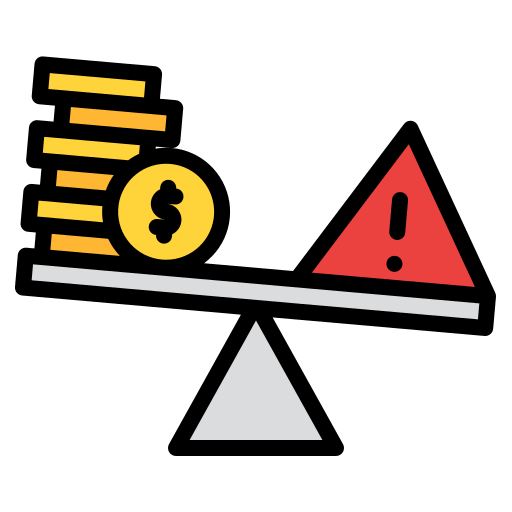 One of the main reasons for SSbD is the need to avoid false improvements. A product may have a lower carbon footprint but contain a more problematic substance. It may be easier to make but harder to recycle. It may last longer but raise the risk of exposure when someone applies it.
So SSbD requires an analysis of trade-offs. The assessment should help you find trade-offs between safety, nature, and social and economic aspects. It should also take into account how certain the data is at each stage.
In practice, a design decision should not rest on a single indicator, such as CO₂e emissions. The carbon footprint matters, but it does not describe the full safety and sustainability profile of a product.
Records: the condition for credible SSbD
 A professional SSbD process requires you to document decisions. It is not enough to say that a solution is "more sustainable". You must show the data, assumptions, system boundaries and criteria behind this view.
The framework has a separate chapter on records. Its goal is to record the key elements of SSbD work in an orderly and open way. The records should cover the full method of the study:
- the scope of the assessment;
- a description of the system;
- the goal of the innovation;
- the design principles applied;
- input data;
- data sources;
- assumptions;
- data gaps;
- the safety assessment;
- the assessment of impact on nature;
- the social and economic assessment;
- results;
- trade-offs;
- open questions and doubts;
- conclusions for the next round.
This matters most when you use SSbD results in talks with customers, your R&D team, the board, investors, certification bodies or supply chain partners.
What does SSbD mean for suppliers in European supply chains?
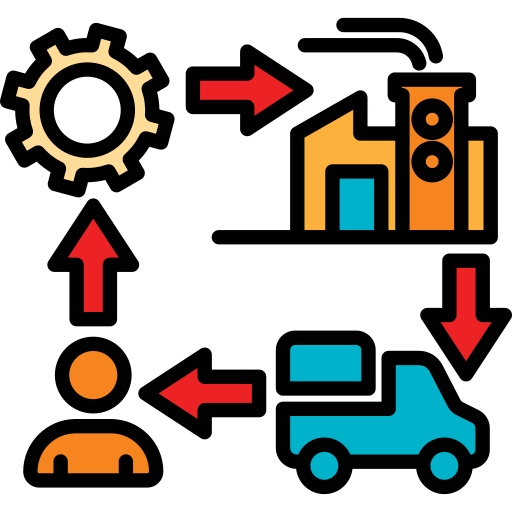 For many companies, SSbD will not be a formal duty. But it can soon become a practical common language with larger customers, above all in European supply chains.
Companies that sell parts, materials or products to large buyers may get more questions about:
- what the product is made of;
- substances of concern;
- the product carbon footprint;
- EPDs;
- LCA data;
- the share of recycled materials;
- how easy the product is to recycle;
- supply chain resilience;
- the origin of raw materials;
- compliance with customers' purchasing policies.
SSbD can help you organise this data in a way that is useful for product design, sales talks and risk management.
Not every company needs a full SSbD assessment at once. A sensible first step is often a scoping analysis, a life cycle map and a list of missing data. Add a first screening of safety and impact on nature for one product or material.
How do you start with SSbD?
 A practical first step is to choose one product, material or process and prepare a simplified SSbD analysis.
This analysis should answer these questions:
- Which material, substance or mixture do you assess?
- What function does it have in the product?
- What does the production and processing look like?
- What are the main stages of the life cycle?
- What data on make-up, safety and impact on nature do you have?
- Where are the largest data gaps?
- Which design options are realistic?
- Which decision criteria matter most to the company?
- Does the change improve one aspect without making others worse?
In many cases, this is a good start for further work. Examples are LCA, a product carbon footprint, an EPD or a check of substances. Others are a supply chain risk analysis or an ecodesign strategy.
Key points to remember
- SSbD is a voluntary approach to designing chemicals, materials, processes and products. It brings together safety, LCA, social and economic aspects, and documented decisions.
- Safe and Sustainable by Design does not mean improving one indicator, such as CO₂. It means assessing the full profile of a solution over its life cycle.
- SSbD does not replace REACH, CLP, EPD, LCA or internal company procedures. It can organise them into one consistent way of making decisions.
- In practice, you should use SSbD in rounds: from early screening in innovation to a fuller assessment when more data is available.
- Comparing options should include minimum criteria and an assessment against several criteria. This stops one good feature from hiding other risks.
- SSbD has business value for companies in European supply chains. This is true above all where customers expect data on safety, LCA, EPD, recycling and product make-up.
- SSbD is common in Horizon Europe projects, above all on chemicals, advanced materials and replacing substances of concern.
- The PARC SSbD Toolbox can help turn the principles of the framework into practical tools, workflows and assessment steps.
- For companies with mature procedures, SSbD will be a benchmark and a way to organise them. For companies without such procedures, it can be a practical starting point.
- The main value of SSbD is that it helps you find risks, trade-offs and data gaps earlier, before the product reaches the market.
Sources
[1] Abbate, E. et al., Joint Research Centre (2024). Safe and Sustainable by Design chemicals and materials: Methodological Guidance. JRC138035: publications.jrc.ec.europa.eu
[2] Garmendia Aguirre, I. et al., Joint Research Centre (2025). Safe and Sustainable by Design Chemicals and Materials. Revised framework (2025). JRC143022: publications.jrc.ec.europa.eu
[3] European Commission, CORDIS. SSbD4CheM project, grant agreement 101138475: cordis.europa.eu