

Many exporters believe that green claims face looser rules outside the EU, because Brussels writes the strictest laws. The laws may sound stricter, but charges arise under similar rules elsewhere. An exporter that checks its claims only against EU law can still face a fine in Sydney, London or Tokyo.
- Greenwashing fines worldwide: the highest are in Australia, up to 30% of turnover for the period of the breach.
- The fastest route: the UK competition authority can fine up to 10% of turnover itself, without a court ruling.
- The charge: arises from the overall impression of the pack and the advert, not from one false sentence.
- Burden of proof: the company must show the basis of a claim; the authority need not prove it false.
- Timing: the evidence must exist before publication; Japan's authority gives 15 days to show it.
- B2B channel: the request for evidence comes from the buyer before the authority, and returns through the contract.
How high are greenwashing fines around the world?
 The ranges alone say little, because each authority calculates fines from something different. Sometimes from turnover, sometimes from the revenue of one product, in China from the cost of the advert. The last column shows what decided each case.
| Market | Who fines | How much | What decided in practice |
|---|---|---|---|
| Australia | ACCC; for financial markets ASIC | AUD 100 million, three times the benefit, or 30% of turnover for the period of the breach | Clorox, AUD 8.25 million: bags sold as half made from ocean plastic, which was in fact collected up to 50 km from the coast |
| United Kingdom | CMA, without going to court | up to 10% of turnover, and up to GBP 300,000 for an individual | ASOS, Boohoo and George at Asda: "responsible" ranges with no clear criteria, and filters that showed goods outside the criteria |
| Canada | Competition Bureau and Competition Tribunal | CAD 10 million for a first order, 15 million for later ones, or 3% of worldwide turnover if the benefit cannot be set | Keurig Canada, CAD 3 million: coffee pods sold as recyclable, although local systems outside two provinces did not accept them |
| Japan | Consumer Affairs Agency | 3% of the revenue from the product with the challenged claim, up to three years back | Marukyu, JPY 17.74 million: breakdown shown only in a lab, while the advert suggested breakdown in the environment |
| USA | FTC, state attorneys general; SEC for listed companies | no money fine for a first breach; USD 53,088 per breach when the authority proves the company knew | JBS USA, USD 1.1 million: a "Net Zero by 2040" target announced before the company had calculated its own emissions |
| China | SAMR and local market regulators | three to five times the cost of the advert, from RMB 200,000 to 1 million, and for repeat offences loss of the business licence | use of test results in an advert that cannot be verified |
The US scores lowest in this table, which usually surprises companies preparing for that market. The Federal Trade Commission does not fine companies itself. It must take a company to court, and there is no money fine at all for a first breach. Walmart and Kohl's paid USD 3 million and 2.5 million for rayon sold as bamboo. But this was only because both chains had received warnings back in 2010. So the authority had it in black and white that they knew.
What exactly is a charge about?
 It is about the impression the whole message leaves. The UK code says so directly. A claim can mislead even if it is true, when the overall presentation misleads: the words, logos, graphics and what is left out.
The Australian bin bag case shows how this works. The pack said that half the plastic came from the ocean. In fact, it was collected in Indonesian villages up to 50 km from the coast. The court did not stop at the sentence. It also counted the blue colours and the wave on the pack. It found the small note on the back too weak to reverse that impression. 2.2 million packs were sold.
The sources of a false impression repeat in every country:
- A target read as the present state: an airline spoke of protecting the planet's future, but had only targets for 2030 and 2050.
- A claim about the whole product based on one feature: one recycled part does not make the product environmentally friendly.
- Your own badge that looks like a certificate: we describe the differences in our article on types of environmental labels and declarations.
- Leaving things out: a coffee pod maker cited positive recycling tests but left out negative views from two large recycling firms.
- Conditions hidden in the terms: in an Australian restaurant chain case, about 4% of the purchases in the campaign triggered a donation for tree planting.
In August 2026, Japan's consumer agency asked a thousand people what they understand from such labels. 55.1% read the word "ECO" alone as general greenness of the product. 73% assume that the claimed material makes up at least half of the product, and 80.1% read a reduction claim the same way. A maker that writes "made from recycled material" with 12% of such material is not lying in formal terms. But the buyer still leaves the shop convinced they bought something else.
Who must prove that a claim had a basis?
 Not the authority. In cases about environmental claims, it usually does not have to show that a claim is false. It is enough that the company cannot show what it based the claim on.
- Canada: the law says so in so many words: the burden of showing adequate testing lies with whoever makes the claim.
- USA: a lack of support at the time of publication is an unfair practice in itself, whether or not the claim turns out true.
- Japan: if a company fails to show the basis after a request, the law treats the claim as misleading.
- Australia: a claim about the future counts as misleading if the company cannot show reasonable grounds. The authority must still convince the court.
So the argument that a claim was true will not help. A document dated before the campaign will. An Australian court fined a pension fund AUD 11.3 million. It saw the breaches as serious because the company had no system to check its ESG claims. No one hid anything there. No one was checking.
When must the evidence exist?
 Before the claim is published. Three authorities say this in three different sentences that mean the same:
- USA: an advertiser must have and rely on a reasonable basis before the advert is spread. For environmental claims, this usually means competent scientific evidence.
- Canada: the testing must be done before the claim is made. Adding it after a case starts does not cure the breach.
- UK: claims made without checking whether evidence exists are a problem even if they turn out true.
Japan went furthest. The authority asks a company to show reasonable grounds for a claim and gives it 15 days as a rule. You cannot do a life cycle assessment or a biodegradation test in two weeks. So the rule assumes that the documents are already in the drawer. Both fined companies did send something. The authority found that it proved nothing, because breakdown happened in a lab, while the advert promised the product would vanish after use.
What do authorities accept as evidence?
 Everywhere the same: a documented, real effect of products and services on the environment. Statements of intent do not count. Canadian law splits claims into two groups, and this split helps in every market, because each group needs a different document:
- A claim about a product needs a study of that product: a product carbon footprint, a life cycle assessment or an environmental product declaration (EPD).
- A claim about the company, such as a net zero pledge, needs support at company level. That means a calculated corporate carbon footprint and a plan to reach the target.
The JBS case shows what happens when the second path is missing. The New York attorney general challenged the "Net Zero by 2040" target. When the company announced it, it had not calculated its total emissions and had no plan or feasibility study. At the same time, it was announcing more production. The settlement cost USD 1.1 million. SBTi target validation does exactly what was missing there: it checks a target before the company announces it.
One recent exception is worth knowing. In March 2026, Canada removed the rule that support must follow an internationally recognised method. The bar formally dropped, but the duty to have adequate testing stayed. In a dispute, a document checked by an outside party still holds up better. We explain how verification differs from validation and assurance in a separate article.
In August, Japan's agency collected 139 environmental labels from online shops and adverts. None showed supporting data. In 59, it was impossible to tell what the claimed benefit was. In 29 of the 62 labels about materials, the percentage was missing.
Who starts a case?
 An authority rarely finds a case on its own. Usually someone brings it:
- A competitor: in the US it can sue, and in Australia it can seek a ban without the authority. In the UK it complains to the advertising self-regulator.
- A civil society group: in Canada, since June 2025 it can go straight to the tribunal. Since March 2026, this no longer covers claims about a whole company.
- A state attorney general: in the US, this is now the most effective route, because it does not require proof that the company knew.
- A market sweep: the Australian authority reviewed 247 companies and questioned claims at 57% of them, most often in cosmetics, clothing, and food and drink.
- A business buyer: it does not run proceedings, but asks for evidence in a supplier survey. Usually it asks first.
The UK has its own feature. Its competition authority does not handle single consumer complaints. It looks at whole sectors: fashion, heating, fast-moving consumer goods. So you will not get a letter about one product. You will get news that the authority has turned to the market you sell in.
Why does the question come earlier in B2B exports?
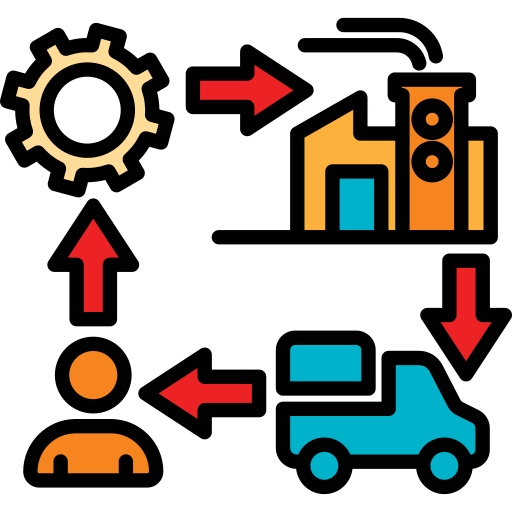 Because the buyer answers for a claim it takes over from its supplier. In January 2026, the UK authority issued guidance on claims across the supply chain. A seller must get reliable and current evidence from its supplier before it advertises a product. Since October 2025, China's anti-unfair competition law has covered misleading promotion aimed not only at consumers but also at other businesses.
For a European manufacturer, this means the risk comes back through the contract before any authority appears. The buyer adds a statement on the accuracy of claims, a right to audit and recourse to the contract. Then it asks for a document. Usually one of three: a product carbon footprint, an EPD or verification of a claim under ISO 14021.
A distribution agreement does not remove this. In China, the company that promotes its own goods is liable. Naming an importer or a sales platform does not transfer liability for the message. The fine may go to the company present in China, but that company then comes back to the maker for recourse.
What can you not undo after a charge?
 Removing a slogan from the website does not close the case. Authorities work with web archives and with packs already on the market, and they count the breach period backwards. Japan's surcharge reaches three years before the practice stopped. The Australian bin bag case covered two years of sales.
The opposite reaction also has a price. In 2025, a Canadian bank dropped a CAD 500 billion sustainable finance target and cited anti-greenwashing rules directly. It did not stop wanting the target. It had nothing to defend it with.
Market by market: what applies in practice?
 The rules differ in detail from market to market:
USA: weak federal rules, risk in the states
The federal guidelines for environmental claims, the Green Guides, date from 1992 and were last changed in 2012. A review opened in December 2022 and has not closed. The guides are not law. They serve as a reference when judging whether a practice was unfair. Real risk has moved to the states. California's law on voluntary carbon offset markets covers anyone who claims neutrality or large reductions, with no revenue threshold. The fine reaches USD 2,500 a day. But the trend is not one-way: in July 2026, a federal court blocked California's ban on recycling arrows on packaging.
United Kingdom: a fine without a court ruling
Since April 2025, the competition authority finds breaches of consumer law and imposes fines itself. On substance, it relies on the 2021 Green Claims Code and its six principles. They include fair comparisons and the duty to consider the whole life cycle of a product. Financial markets have a separate anti-greenwashing rule, in force since May 2024.
Canada: the burden of proof written into the law
An amendment in June 2024 added two provisions to the Competition Act. One covers claims about products, the other claims about the whole business, and in both the company bears the burden of showing support. A further change in March 2026 removed the rule on internationally recognised methods. It also closed the tribunal to private parties in cases about claims on the whole company.
Australia: the highest fines and the richest case law
Most reasoned rulings come from here, so the best examples do too. The rule on claims about the future works as a presumption: without reasonable grounds, a promise is misleading by law. The authority has also issued a guide to making environmental claims. For neutrality claims, you must separate real reductions from offsets you bought. You must not present a slice of emissions as the whole result. A fund paid the record fine of AUD 12.9 million. About 74% of its securities had not been screened at all against the claimed criteria.
Japan: 15 days to show evidence
The Act against Unjustifiable Premiums and Misleading Representations lets the authority ask for the basis of a claim, and the company's silence decides the case. The surcharge is 3% of the revenue from the product and rises to 4.5% for a repeat within ten years. Since October 2024, there is also a fine for intentional breaches and a remedy procedure that can close a case without sanctions. The environment ministry updated its guidelines in March 2026, after thirteen years.
China: no dedicated rules, but heavy sanctions
China has no dedicated greenwashing regulation. Cases fall under advertising law and the anti-unfair competition law, and the fine is based on the cost of the advert. What hurts is not the multiplier, but what comes with it. That means an order for a public correction and an entry in the credit system that affects public tenders. For repeat offences, a company can lose its business licence.
Is the EU ahead on this?
 On paper yes, in enforcement no. New EU rules are the only ones that ban specific claims outright, including neutrality claims based on offsets, from 27 September 2026. But the first dedicated guidelines for environmental claims appeared in the US in 1992. And the Australian authority was running cases while the EU was still working on a draft directive.
So the difference lies elsewhere than in the text of the law. Everyone has a general ban on misleading practices; the EU has had one since 2005. The question is who used this tool. In summer 2025 it looked especially awkward. The European Commission announced the withdrawal of the draft Green Claims Directive just as the UK started new fines. At the same time, Canada opened the way for private lawsuits. The draft still formally sits in the Commission's work list, which is worse for planning than a clear refusal.
Poland sits in this average: the tool is strong, but practice is only taking shape. Cases are run by UOKiK, the Office of Competition and Consumer Protection, and its President issues the decisions. The basis is the ban on practices that harm the collective interests of consumers. The maximum fine is 10% of annual turnover, the same as in the UK. Charges have covered Allegro, DHL, DPD, InPost, Bolt, Tchibo, Zara and L'Oréal Polska, among others. They concern marketing about green fleets, neutral deliveries and sustainability that allegedly misled consumers. We collected the details and amounts in our article on greenwashing fines in Poland.
The conclusion for an exporter is practical. A campaign prepared for one market and checked for misleading claims there does not pass the other markets' filters automatically. There, they ask for the document behind the claim.
What should you do before you ship to a new market?
 The order is not random. Each step is cheaper when the previous one is done:
- List every claim that goes abroad: from packs, catalogues, the website, product pages and answers to supplier surveys.
- Split them into two groups: about the product and about the whole company, because they need different documents.
- Check the date of the evidence. If the study came after the claim was published, it will not protect the company in Canada, Japan or the US.
- Judge the overall impression, not single sentences: colours, graphics, badges and what is missing from the message.
- Give a number where the customer guesses one: the share of material, the rate of reduction, the scope of the calculation.
- Secure your contracts, because the buyer will pass statements on the accuracy of claims back to the supplier anyway.
The first two steps are an ordinary review of communication, that is a green claims audit. We describe what greenwashing is and the forms it most often takes in a separate article.
We check claims before an authority or a buyer does
A review of claims on packs, in catalogues and on the website, with a risk assessment market by market, is a green claims audit. Verification under ISO 14021 confirms a single claim.
A product carbon footprint or an environmental product declaration (EPD) provides evidence for a product claim. Evidence for a company claim starts with a corporate carbon footprint and ends with a validated SBTi target.