
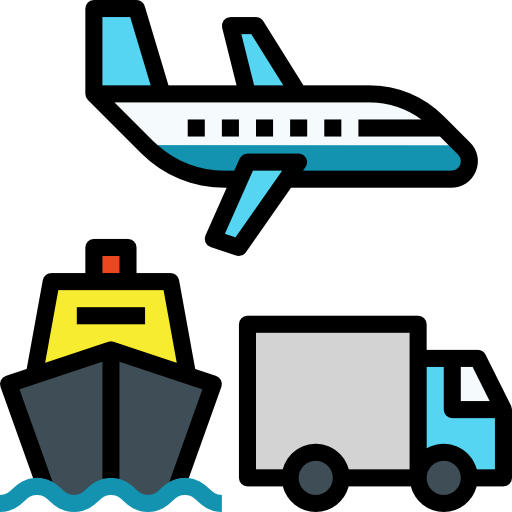
Most of the goods you buy travel to you in trucks, ships, trains or planes that you do not own. One product may also reach you through several suppliers and several modes of transport. The GHG Protocol puts the emissions from this transport in Scope 3 category 4. From December 2030, carriers in the EU that report emissions to customers must calculate them under one EU method.
- Scope 3 category 4, upstream transportation and distribution: emissions from transporting the goods you bought, in vehicles that you do not own.
- It also covers: transport of sold products by third parties, if your company pays for it.
- Methods: fuel-based, distance-based and spend-based.
- Reduction: buy closer to your sites and choose modes of transport with lower emissions.
What does category 4 include?
 Category 4 covers emissions from transporting and distributing the goods that your company bought in the reporting year, in vehicles that it does not own.
This category also includes transport of your sold products by outside operators, when your company pays for this transport.
For which companies does category 4 matter?
 Category 4 can be a notable share of total emissions for makers of industrial goods, for service companies and for the food sector. It also applies to retail.
Calculation methods
 You can calculate category 4 emissions in three ways:
- Fuel-based method: you take the amount of fuel used, that is, the Scope 1 and Scope 2 emissions of the transport provider. Then you apply the emission factor for each type of fuel.
- Distance-based method: you look at the mass, the distance and the mode of transport of the products. Then you apply an emission factor for the vehicle used, based on mass and distance. This factor is usually given per tonne-kilometre.
- Spend-based method: you take the amount spent on each type of transport service. Then you apply secondary emission factors per unit of money spent on these services.
Where do you find the data for this category?
 Depending on the method you choose, look for data on category 4 in these places:
- your transport providers (their Scope 1 and 2 emissions for each shipment);
- your company's internal systems, for example the purchasing system;
- your own estimate of the transport route (place of dispatch, mode of transport, place of delivery or reloading).
From 2 December 2030, carriers that give their customers the emissions of specific transport services will calculate them under one EU method (the CountEmissionsEU regulation).
What are the main challenges in category 4?
 Two challenges come up most often:
- You may buy one product from many suppliers. You need to check the logistics for each product from each supplier.
- The transport of one product may include several modes: road, sea and rail. You need to analyse each part of the route and choose the right factors for it.
How to reduce emissions in Scope 3 category 4?
 These steps help you cut emissions from transport:
- Check where your suppliers are. Imported goods can have a larger footprint, especially when they travel by plane.
- Find out if you can buy the same goods closer to your company.
- Think about another mode of transport. Air is the mode with the highest emissions, and rail has a much lower footprint than the others.
Are you calculating transport emissions in Scope 3? See our transport carbon footprint service under ISO 14083. We calculate the emissions of your transport on a well-to-wheel basis, for all modes, ready for Scope 3, the CSRD and your customers' requirements.
 ← Previous · Category 3Fuel- and energy-related activities
 Next · Category 5 →Waste generated in operations